The government should change its stance on data centers
If we can offer the industry speed and predictability, we can demand more in return.
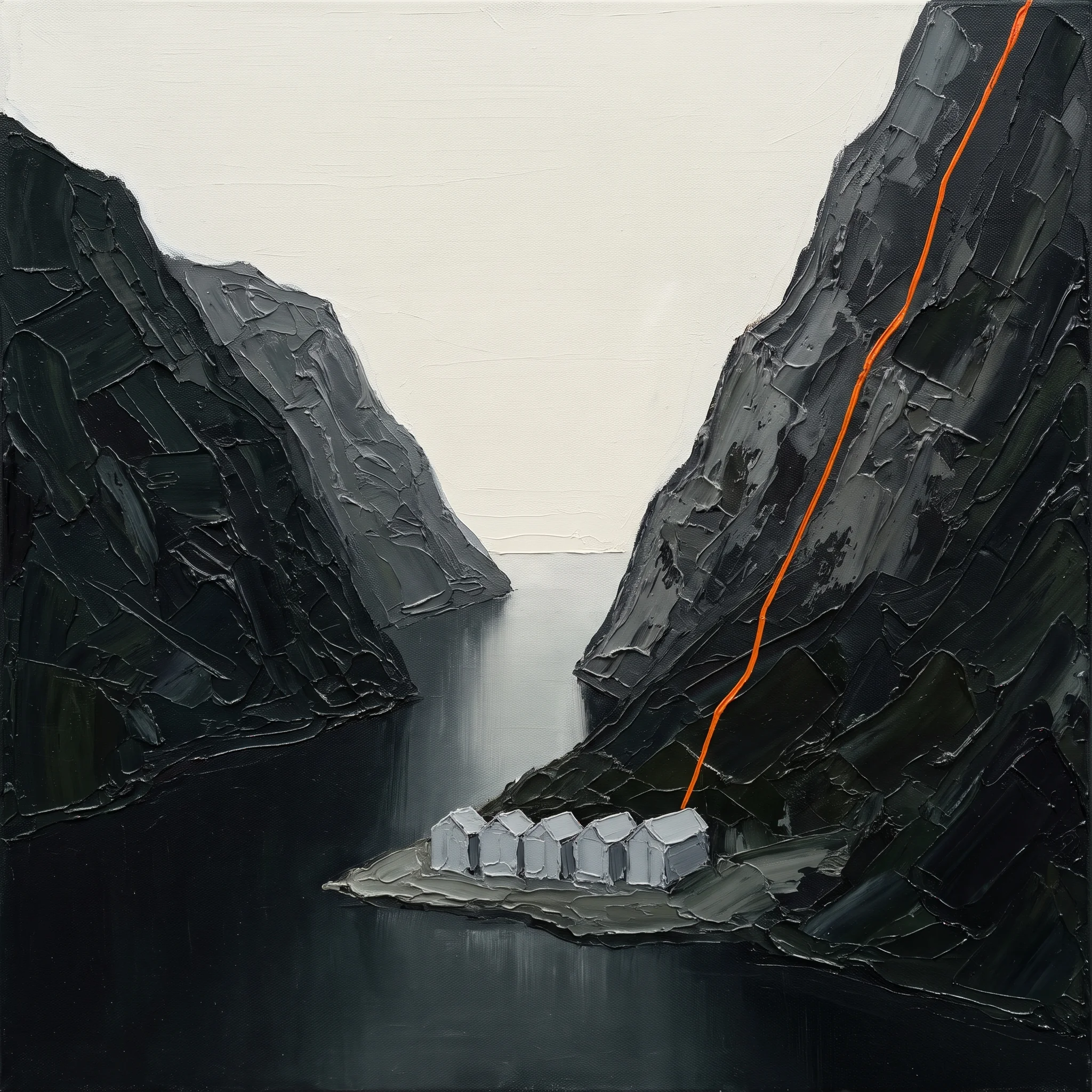
AI-generated illustration from Gemini.
Main moments
The capacity of the power grid is maxed out, and data centers account for the majority of the demand. It is time for a new policy, but this week's restrictive measures could cause us to miss out on a valuable opportunity.
The government is proposing a licensing requirement for data centers. This means that every data center project, in addition to waiting for years in a connection queue, must be approved by a national authority based on its societal benefit.
There is a risk that we are squandering an important strategic and economic opportunity for Norway.
Data centers are a bottleneck for enormous AI investments. Wealthy companies with a high willingness to pay are prepared to pay much more for data centers than they do today – as long as they can build quickly. For developers, one year of regulatory waiting time costs more than a doubling of the electricity price.
If we can offer the industry speed and predictability, we can demand more in return. A fast track for establishing data centers, where we auction off rapid establishment on sites that place little strain on the power grid, is a good opportunity. With the auction proceeds, we can invest in grid expansion and more power production. Municipalities can choose for themselves whether they want to participate, and they can receive a share of the revenue.
Such a solution still provides control over how many data centers we want to build and where we should build them. The fast track thus achieves everything one would want with a licensing requirement, but gets the maximum out of the data centers we actually want.
And if AI development continues to deliver, we already have a system in place that secures us a share of the super-profits.
Data centers are important beyond value creation. They give us bargaining power in the AI value chain. If we are proactive, we can secure a grip on both the influence and the value creation in the new economy. Just as we did with oil.
It is not too late to change course.
More from Langsikt
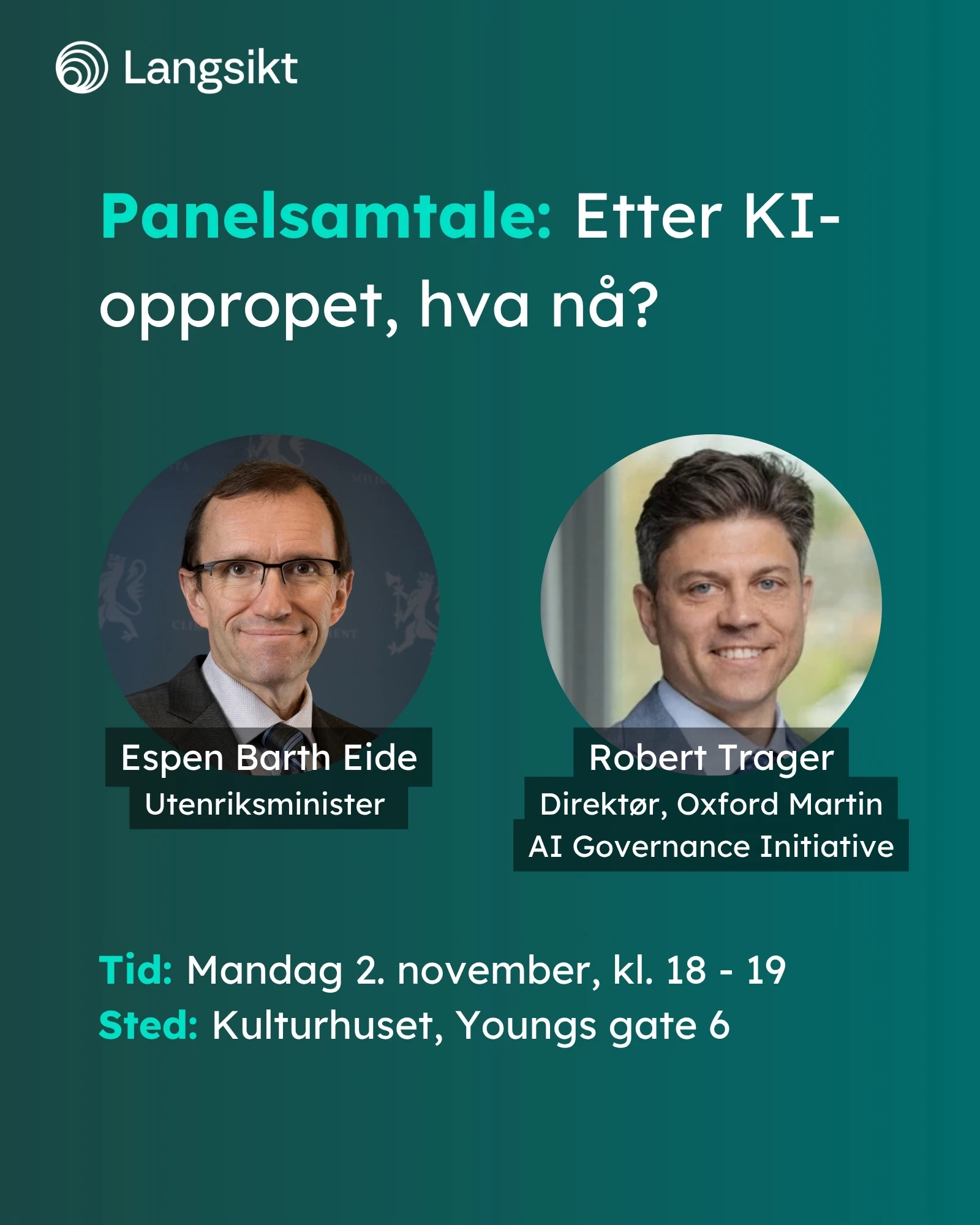
[Recording] After the AI call, what now?
Watch the recording of the panel discussion on AI between Foreign Minister Espen Barth Eide and Prof. Robert Trager.

Input to the Standing Committee on Justice: Investing in the security dimension of emerging technologies
Langsikt consultation input to the Standing Committee on Justice.
Input to the Standing Committee on Local Government and Public Administration: AI-Norway
Langsikt's consultation response to the Standing Committee on Local Government and Public Administration.

Confused about the AI threat?
Recent events have made AI risk a topic of public debate in Norway. Some researchers issue strong warnings, others claim they see doomsday on the horizon, while others dismiss the whole thing as marketing campaigns. This document summarizes what we know, what is disputed, and what the implications of this uncertainty are. The document can also be downloaded as a PDF.