Time for the Storting to keep its word
In 2023, a parliamentary majority established that support for Ukraine should not come at the expense of the world's poorest, yet three years later, it does. In the budget negotiations, the Storting can turn the tide.

AI-generated illustration from Gemini.
Main moments
Last year, for the first time, famine was confirmed in two places simultaneously, in Gaza and Sudan. Even so, international support for the World Food Programme (WFP) fell by around 40 percent. In October, the organization, which provides food and cash assistance, announced that it must cut aid in Gaza by a third. Half a million people are losing critical aid ahead of winter.
At the same time, 15 billion kroner in Ukraine support is being drawn from the aid budget at the expense of efforts in other crises.
The Storting promised not to forget the world
When the Nansen Programme was adopted in 2023, a majority wrote in the committee recommendation that the commitment to Ukraine must not lead to "losing sight of the major challenges related to humanitarian needs and global development in the rest of the world." That would "first and foremost harm the world's poor."
At the end of 2024, the parliamentary parties agreed on expanded support for Ukraine, stating at the same time: "The increase in civilian support for Ukraine does not come at the expense of Norwegian efforts in other crises."
But that is exactly what has happened. The humanitarian chapter intended to cover the rest of the world is over 600 million kroner lower in the 2027 proposal than in the last budget proposal before the war. In constant prices, the decline is closer to two billion kroner. Nearly half of this decline is due to cuts in core funding for the WFP.
The massive imbalance in the distribution of support from the aid budget does not reflect the global situation or the government's own stated goal in the budget proposal: "People in need have received necessary protection and assistance in line with humanitarian principles." One of these principles is impartiality, with distribution based on need.
But the Storting can look up again
The parliamentary majority should increase core funding for the WFP by at least one billion kroner. This would move us a small step closer to distribution based on need and show that Norway has not lost sight of the rest of the world.
Through core funding, we ensure that resources follow needs. The WFP prioritizes where the need is greatest. At the same time, the WFP is one of the world's largest providers of cash transfers in crises, one of the best-documented measures in humanitarian aid. When aid is provided as cash transfers, recipients can decide what the money is used for.
Good opportunities for consensus
We have reviewed the party platforms and alternative budgets of the negotiating parties. They agree on much, including humanitarian efforts, global health, and climate adaptation. This provides good opportunities to achieve a boost for the world's poorest.
As a minimum, the parties should agree on an emergency aid boost that lives up to the promise from 2023.
More from Langsikt
Security or solidarity?
Norway should support Ukraine in its fight against Russia. However, this extraordinary support is motivated by European and Norwegian security interests and should therefore not be funded at the expense of the world's poorest.
Input to the Standing Committee on Foreign Affairs and Defence: The aid budget
Langsikt's consultation response to the Standing Committee on Foreign Affairs and Defence.
[Opptak] Forbi overskriftene – hva vil vi faktisk gjøre med norsk bistand?
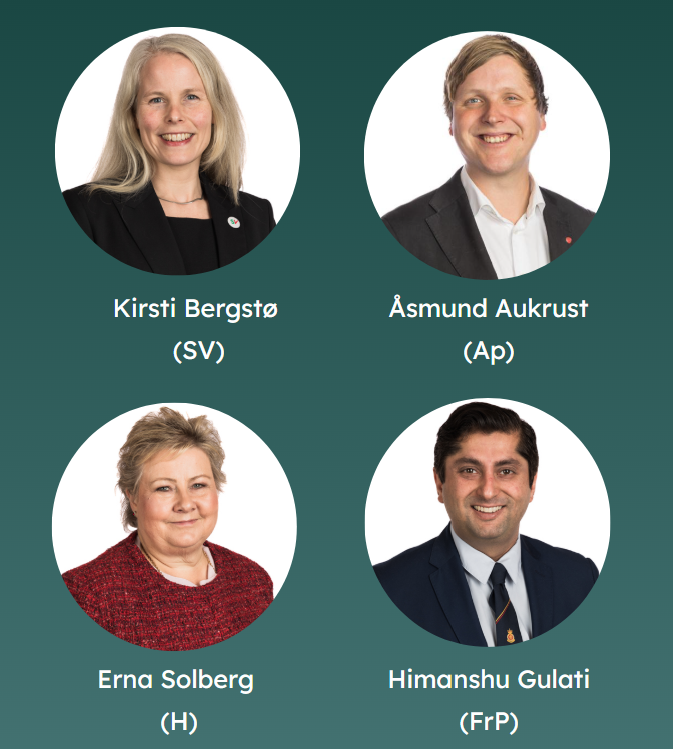
Se opptak av frokostarrangement i samarbeid med Civita og Agenda, med politikerdebatt mellom utviklingsminister Åsmund Aukrust, Erna Solberg (H), Himanshu Gulati (FrP) og Kirsti Bergstø (SV).
Langsikt's alternative aid budget
How the Norwegian aid budget should look.