Input to the Standing Committee on Foreign Affairs and Defence: The aid budget
Langsikt's consultation response to the Standing Committee on Foreign Affairs and Defence.
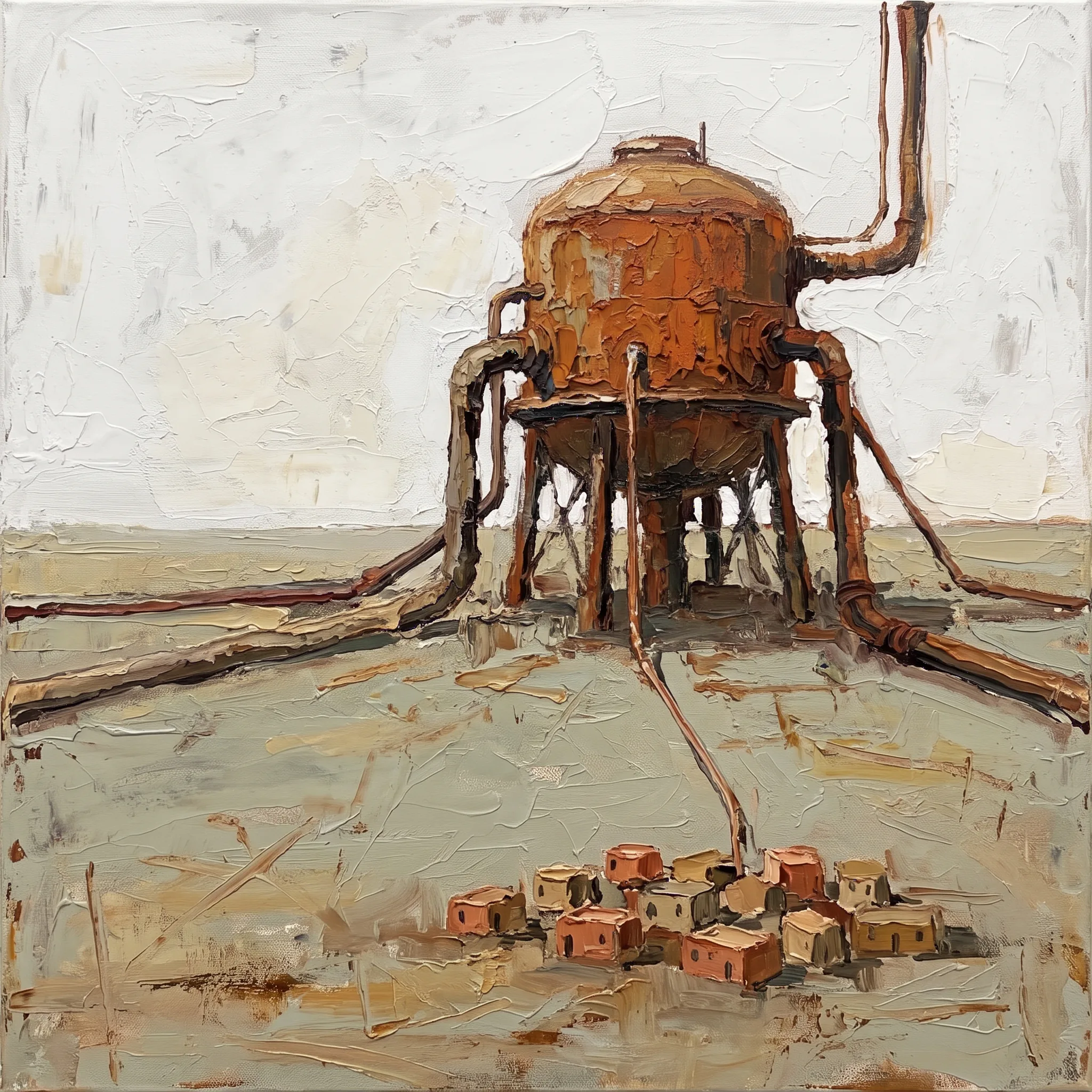
AI-generated illustration from Gemini.
Main moments
To the Standing Committee on Foreign Affairs and Defence
In the government's proposed aid budget, only 0.50 percent of GNI is allocated to poverty reduction and emergency relief in the poorest countries.
Langsikt has calculated this figure by weighting all budget items using a method based on the categories established by the government-appointed Sending Committee and Norad's operationalization of them.
The size of the aid budget therefore says little about how much poverty reduction and emergency relief Norway is actually paying for. Langsikt has created an alternative aid budget that ring-fences 0.7 percent of GNI for poverty reduction and emergency relief, within a total framework of 1 percent of GNI. We highlight the three most important measures here. The memorandum and the full spreadsheet with item-by-item weighting will be emailed to the committee members.
1) Stop the dilution of aid
Non-humanitarian support to Ukraine, Chapter 159, Item 73: -3.6 billion NOK. Over 30 percent of the government's proposal goes to Ukraine and refugee measures in Norway. 15 billion NOK of the Nansen Support Programme is charged to the aid budget, despite humanitarian support amounting to only 3.5 billion. Energy security and operating support for Ukrainian authorities account for the majority of what is recorded as aid, even though these measures serve the same security policy interests as military support. The world's poorest should not pay for security in Europe. We propose shifting one-third of the non-humanitarian support, 3.6 billion in 2027, and the remainder from 2028.
Refugee measures in Norway, Chapter 179, Item 21: -2.6 billion NOK. Expenditure should be budgeted where the costs are actually incurred. Funds spent in Norway should not count as aid to the poorest countries, even if OECD regulations allow it.
Capital injections into Norfund, Chapter 165: -4.4 billion NOK. The state's own regulations state that capital injections are not an expense. The Ministry of Finance defines loan transactions as asset reallocations, which fall outside the oil-adjusted budget deficit. It is inconsistent to count them within a framework defined as an expenditure share of GNI. Every krone placed in Norfund and counted as aid is a krone that does not go to health, education, or emergency relief.
Other cuts: -1.4 billion NOK. Langsikt also proposes several smaller cuts:
- Chapter 100.01: The Ministry of Foreign Affairs' operating budget is reduced by 573 million NOK
- Chapter 144: Norec is phased out, reduced by 242 million NOK
- Chapter 170: The civil society item is sharpened to focus on organizations in the South and reduced by 571 million NOK
2) More to the poorest countries, with national ownership
World Bank International Development Association (IDA), Chapter 172, Item 70: +8.1 billion NOKIDA provides grants and highly subsidized loans to the poorest countries, has low administrative costs, and recipient countries largely decide for themselves how the funds are used. This provides national ownership, which both donors and recipients of aid have called for more of. Every donor krone triggers nearly four kroner in financing. In our submission to Vendepunkt, we proposed that 15 percent of aid should go to IDA by 2030, but the cleanup described above provides room to reach this goal as early as 2027.
African Development Fund, Chapter 172, Item 71: +1.1 billion NOK. The fund is structured similarly to the IDA, but is targeted specifically at the 37 poorest countries in Africa.
3) Combat hunger and contribute to better health
World Food Programme (WFP), Chapter 150, Item 71: +2.6 billion NOKWFP is the world's largest humanitarian actor, providing food, cash transfers, and school meals where people are affected by hunger. Support for WFP fell by around 40 percent in 2025, at the same time that famine was confirmed in two countries simultaneously for the first time. We are proposing a major increase in core funding for WFP, which provides the flexible resources WFP can use where the need is greatest.
Global health, Chapter 160, Item 70: +2.1 billion NOK. This budget item has remained stagnant or been reduced for several years in a row, while global health aid has faced significant cuts. The increase provides room both to protect initiatives such as vaccination and maternal and child health, where Norwegian aid contributes to positive results, and to increase efforts toward strengthening health systems, which Norad currently has little room to prioritize. Increased investment in health in developing countries is also an investment in global health security.
World Health Organization (WHO), Chapter 160.71, and UN Population Fund (UNFPA), Chapter 164.72: +455 million NOK. The WHO coordinates global health cooperation and responses to health crises, but is under pressure following the withdrawal of the United States. Norway should contribute more to a strong WHO. The Population Fund provides contraception and safe childbirth assistance, and this budget item has remained unchanged since 2022.
Proposed motions:
- Two-part aid structure: “The Storting requests that the government propose a two-part goal for aid, with at least 0.7 percent of GNI for poverty reduction and humanitarian efforts, and at least 0.3 percent for global public goods for development. This should be done in connection with the report to the Storting on development policy expected in early 2027.”
- Financing refugee costs outside of aid: “The Storting requests that the government keep refugee expenses in Norway outside of the aid budget.”
- Capital injections not counted as aid: “The Storting requests that the government record all capital injections into Norfund and the Climate Investment Fund as loan transactions, and not count these as part of the aid budget.”
- Risk capital in the Climate Investment Fund: “The Storting requests that the government remove the requirement for risk capital for capital injections into the Climate Investment Fund.”
- Non-humanitarian aid to Ukraine: “The Storting requests that the government present a plan to move non-humanitarian support for Ukraine out of the aid budget, partially in 2027, and with full effect from the 2028 national budget.”
- World Bank, IDA: “The Storting requests that the government set a target for at least 15 percent of Norwegian aid to be allocated to the World Bank’s development fund, IDA, by 2030, and to make IDA the default choice when unspent aid funds are reallocated toward the end of the fiscal year.”
- Civil society: “The Storting requests that the government refine Chapter 170, Item 70 as a mechanism for strengthening civil society in the Global South, and ensure that 50% of the support is provided directly to local partners by 2030.”
- Global health: “The Storting requests that the government set a target for at least 15 percent of the aid budget to be allocated to global health.”
- Expert advisory council on aid: “The Storting requests that the government task Norad with delivering an annual expert advisory report on aid, modeled after the Chief of Defence’s military advice.”
Langsikt is an independent, non-profit think tank for more long-term policy.
Contact: Henrik Hvaal, Senior Advisor, henrik@langsikt.no.
More from Langsikt
[Opptak] Forbi overskriftene – hva vil vi faktisk gjøre med norsk bistand?
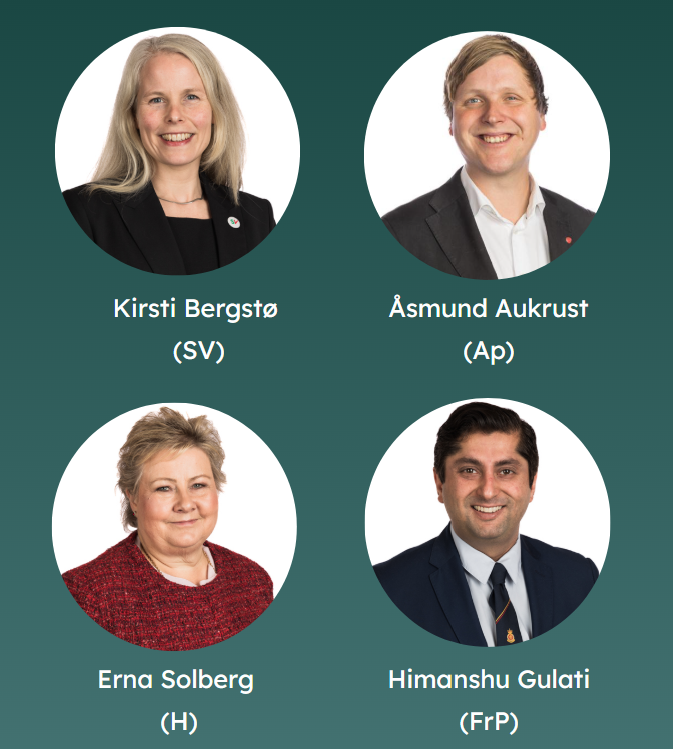
Se opptak av frokostarrangement i samarbeid med Civita og Agenda, med politikerdebatt mellom utviklingsminister Åsmund Aukrust, Erna Solberg (H), Himanshu Gulati (FrP) og Kirsti Bergstø (SV).
Langsikt's alternative aid budget
How the Norwegian aid budget should look.
The second problem with aid
Much of the pressure on foreign aid comes from the outside. But we must take some of the blame ourselves.
Submission to Project Turning Point (Prosjekt Vendepunkt)
Six proposals for Project Turning Point.