The Hidden Architect Behind Norway's Prosperity
… and what he can teach us about artificial intelligence.
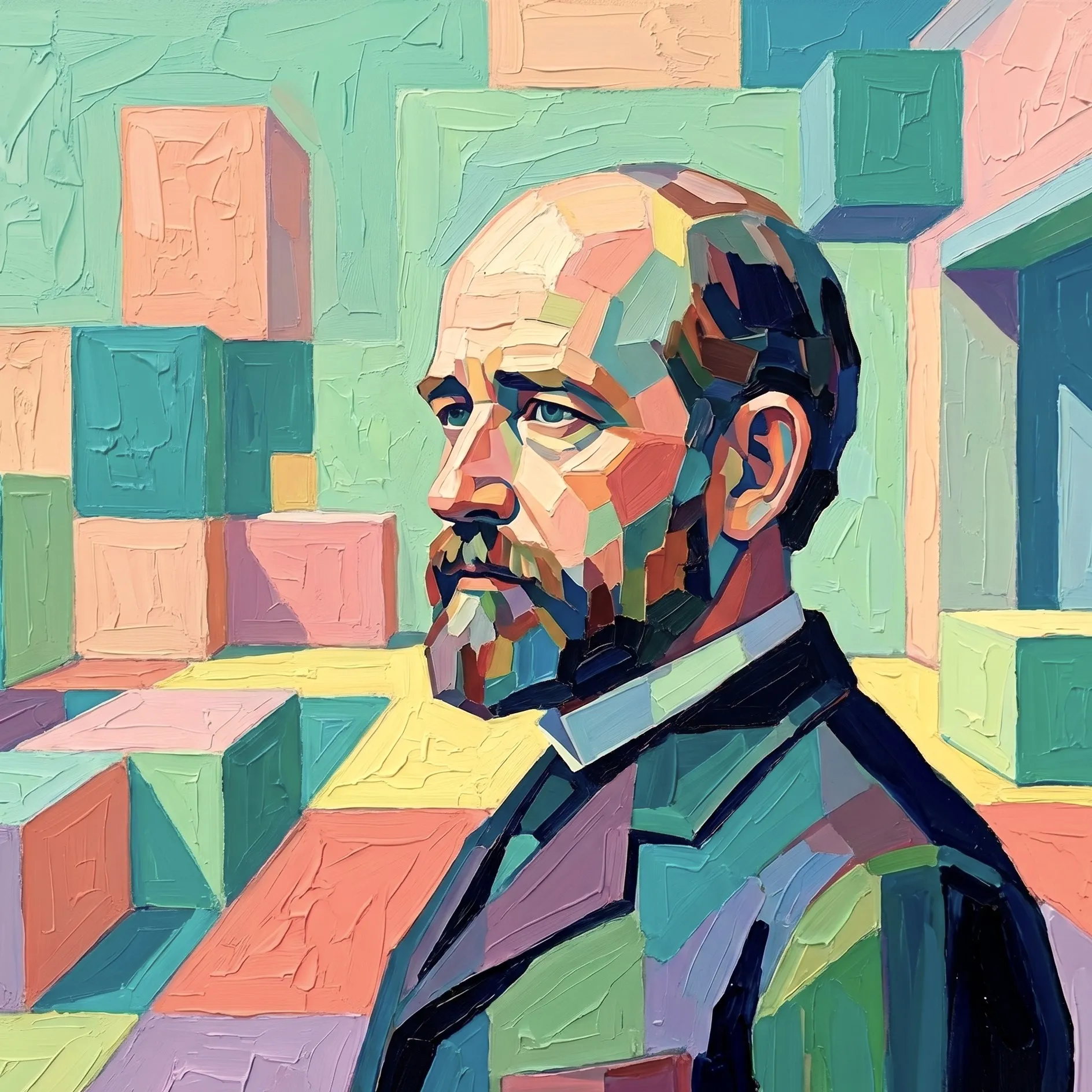
AI-generated illustration from Gemini.
Main moments
Norway has 150 years of experience preventing the privatization of nature's gifts. Perhaps we should apply this experience to the management of artificial intelligence?
Much of the credit for Norway's exceptional wealth belongs to an American named Henry George. Today, few have heard of the man, but in the late 1800s, George was perhaps the world's most famous and respected economic thinker.
George's central idea was that values "offered freely by nature," such as waterfalls, rivers, and land, should belong to everyone. Natural resources have value regardless of the labor involved in refining them. This "economic rent" should accrue to the community.
Large parts of the Liberal Party were staunch Georgists. Viggo Ullmann, who led the Liberal Party for two terms, translated the book into Danish-Norwegian in 1886. But the most important Georgist was Johan Castberg, the man who ensured that hydropower remained in Norwegian hands with the concession laws of 1909.
To prevent capital-rich foreigners from gaining control over hydropower immediately after Norway gained independence, he spearheaded the introduction of strict regulations to secure Norwegian ownership of hydropower in the short and long term.
Later, the oil regime was built on the same model. In exchange for American companies being allowed to extract oil on the continental shelf, requirements were made for technology transfer, a Norwegian supplier industry, and an additional resource rent tax. Later, the Government Pension Fund Global and the fiscal rule ensured that the resources in the ground were converted into ownership in global companies, benefiting future generations as well. It doesn't get more Georgist than that.
Now we face a technological revolution, where there is a dire need for guiding principles. In Norway, we are at a loss as to what to do.
The only visible industrial step Norway has taken regarding AI is facilitating the establishment of data centers by providing them with access to cheap concession power. In reality, this transfers the economic rent from hydropower to data center companies in exchange for a small number of jobs.
Unlike in the US, where the enormous data center expansion is linked to the development of a national AI industry, the Norwegian data center 'adventure' lacks both industrial and strategic visions.
If Norway is to use its power resources for data centers, we must think along similar lines as with hydropower and oil. Data center development must go hand in hand with the development of our own expertise and industry.
The AI age raises a deeper Georgist question about the ownership of data resources. The value in the best AI systems is created by everyone who has ever written a book, published an article, posted a recipe, or debated online. Now, major players are profiting handsomely from the privatization of this digital commons.
One response is to insist on stronger copyright. But a more Georgist answer would be to think of data as a value "offered freely" on the internet and therefore taxed: a data resource rent tax, as the head of Mistral, Europe's leading AI company, recently advocated.
Such a tax will only become more important the more tasks AI agents can take over. A data resource rent tax, which gives people an "AI dividend," could be a wise move to ensure that the community's values find their way into people's hands.
Norway also needs a strategic vision for our own data resources. Norway's health data, population data, and social registers are among the most complete in the world and can be extremely valuable for a variety of AI applications. Here, the concession model from hydropower can be applied directly: access to data is granted on condition of knowledge transfer, Norwegian AI development, and fees that benefit the community.
Thanks to its Georgist oil management, Norway has a seat at the table where the future is decided. The Oil Fund is heavily exposed to the American technology industry. Microsoft, Google, Nvidia, and Amazon, which are building the technological infrastructure that AI relies on, are among the fund's largest holdings.
As one of the world's largest single shareholders, the fund votes at general meetings and regularly engages in dialogue with company management about governance and long-term value creation. But that's not enough. Norway and the rest of Europe cannot continue to live with their dependence on American technology companies. Anthropic's AI model Mythos demonstrates the power imbalances that AI development is already creating.
Due to the model's exceptional cyber capabilities , the company chose to grant a select group of important companies access to the model, while others have to wait.
In other words, a private company, not even publicly listed, decides whether Norwegian businesses get access to models in time to defend themselves against advanced cyberattacks.
If we are to secure our sovereignty and values, we need our own AI infrastructure. But it won't be cheap. The four major tech companies are expected to spend almost an entire Oil Fund on AI infrastructure this year.
Norway's oil wealth gives us the economic muscle. The management of hydropower and oil was particularly effective because it did more than just extract ground rent through taxation. It converted the ground rent into industrial capacity, ensuring high long-term value creation.
A more active state that facilitates an AI industry in Europe can thus be the bridge from one Georgist success to another.
More from Langsikt
Confused about the AI threat?
Recent events have made AI risk a topic of public debate in Norway. Some researchers issue strong warnings, others claim they see doomsday on the horizon, while others dismiss the whole thing as marketing campaigns. This document summarizes what we know, what is disputed, and what the implications of this uncertainty are. The document can also be downloaded as a PDF.

A Norwegian foreign policy for artificial intelligence
Why and how Norway should position itself in a new security policy reality.

Konseptnotat for et norsk KI-sikkerhetsorgan
Hvorfor og hvordan Norge bør etablere et KI-sikkerhetsorgan.

The wave of hacking is coming
Until now, small Norwegian businesses have been protected by the fact that no one bothered to hack them. That is changing with open AI.