Tax on suffering
There are several types of taxes we should want more of.
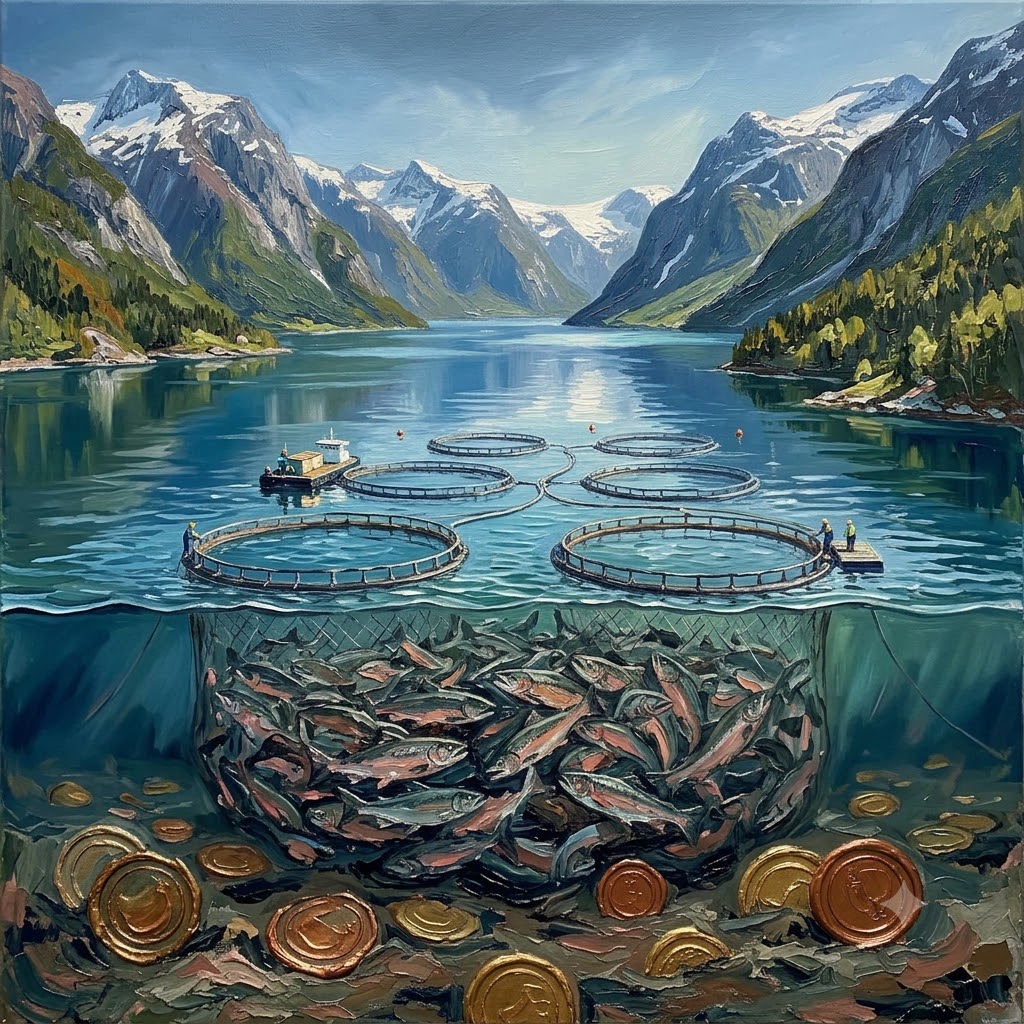
AI-generated illustration from Gemini.
Main moments
The Tax Commission has just provided its pragmatic answers to the question of what the tax system should look like. However, economic theory has more to offer than just marginal adjustments to existing taxes. One of the biggest shortcomings in today's tax system is the absence of a tax on poor animal welfare: a tax on suffering.
Contrary to popular belief, the function of taxation is not to provide the state with money, but to steer economic activity in a more socially beneficial direction – and it does so in two ways.
The most important is to shift consumption from housing, consumer goods, travel, and other things individuals spend their income on, to kindergartens, pensions, hospitals, roads, and everything else we fund collectively. Taxes do not just shift consumption; they also cause individuals to change their behavior. More specifically, they do less of what they would have wanted to do in the absence of the tax. People work less if labor income is taxed and invest less if companies are taxed.
Behind the desire to make the tax system neutral lies a seemingly reasonable idea: that most people are best off if they are allowed to do what they want, when everyone is trying to do what is best for themselves.
But this cannot possibly be true in all cases. Not all spending is equally good. Buying diapers and healthy food for children is seemingly a better use of money than a fifth bottle of gin, even if both are expressions of individual choice.
There are both paternalistic and moralistic justifications for imposing so-called sin taxes, that is, taxes on sinful or immoral activities. Excessive consumption of fatty foods, alcohol, tobacco, gambling, cosmetic surgery, and prostitution are all examples of activities that a society might wish to tax in order to motivate individuals toward a more virtuous life.
It may sound paternalistic. But note that taxes are a less intrusive way to reduce unwanted behavior than bans. Following this logic, a ban on prostitution and drugs could perhaps be replaced with sufficiently high taxes.
The most important justification for targeted taxes is to protect third parties from harm. The best-known example is the CO2 tax, which is intended to help reduce CO2 emissions to avoid harm to current and future generations.
When an activity causes significant harm to third parties, the premise behind the free market—that voluntary market activity leads to greater welfare—is broken. It may be good for both the producer to sell and the consumer to buy goods that produce CO2. However, it can still be negative in total when we account for all the third parties affected.
A tax must therefore be put in place to prevent the activity from creating more harm than welfare.
An example of a product that creates more harm than is optimal is red meat. Agriculture is currently exempt from carbon taxes, while meat production is heavily subsidized. Reducing one's consumption of red meat is one of the most effective ways for people to cut emissions, according to the Environment Agency's calculations. A carbon tax on red meat would therefore have contributed to greater welfare.
However, a tax on red meat fails to consider the animals themselves. If we are to create the best possible tax system for everyone, we cannot ignore the consequences for the animals affected by our actions.
Cows likely lead some of the best lives among animals in Norwegian agriculture, yet they have high carbon emissions. Pigs, chickens, and farmed salmon have lower emissions but lead far worse lives. If we were to introduce a carbon tax on meat, it would likely shift consumer habits toward animals that suffer more. That results in less welfare.
We don't have to give up on the idea, though. One way to avoid an excessive shift from beef to salmon would be to also tax poor animal welfare. The logic is the same as with a carbon tax. Every time you buy cheap salmon for dinner, it is good for you and the fish farmer, but bad for the salmon. With a tax on suffering and death, the fish farmer would do less of what is being taxed—namely, causing less suffering and death.
A tax on animal suffering is therefore necessary to ensure that our consumption does not cause more harm than is avoidable. It may sound strange, but the tax commission actually acknowledges this possibility. In an aside, they mention animal welfare as a negative external cost that can be mitigated through taxation.
The government has also recognized the power of a tax on suffering. This autumn, the government is set to propose a mortality tax for the aquaculture industry to improve the welfare of farmed salmon. High mortality is an indicator of poor animal welfare. A substantial tax on lost fish could lead to significant improvements in the lives of fish in captivity.
This teaches us something important. Not all distortive taxes are bad. And a tax that changes or reduces the activity level in an industry can be for the best. When an industry causes significant harm to people, animals, and nature, it is desirable that the industry either stops doing so or that we use society's scarce resources in a different way.
Ultimately, it is not the figures on a company's bottom line that count, but the welfare of everyone affected by our actions. And it is toward that welfare that the tax system must be directed.
More from Langsikt

The Arguments "Bondelaget" Leads Are Weak
Farmers should not stand in the way of GMOs that can make the farming industry more sustainable and strengthen fish welfare.

Gene technology for better fish welfare
GMO anxiety does not merely cost the aquaculture industry billions of Norwegian kroner; it also harms the lives and health of salmon. To prevent avoidable suffering, industry leaders and policymakers must act quickly.

Confessions of a Hypocrite
In the pursuit of tasty proteins, you are responsible for the lives and murders of thousands of animals over the course of a lifetime. Forget your flights, the infidelity, and the cheap products from China. If animals in production have a claim to being treated like the sentient and thinking beings they are, your diet is probably the worst thing you do.
Norway's underwater blind zone
Norway has a moral blind zone underwater. Annually, 200 million farmed salmon die before slaughter, and behind the figure lurks even more lives. Albert Didriksen and Aksel Braanen Sterri from the Norwegian think-tank Langsikt describe ethical challenges in salmon farming.