Norway contributes to the growth of others
AI is becoming the most important infrastructure of our time. Norway has significant financial interests, but is falling behind in the industrial sector. It makes us rich as investors -- and vulnerable as business.

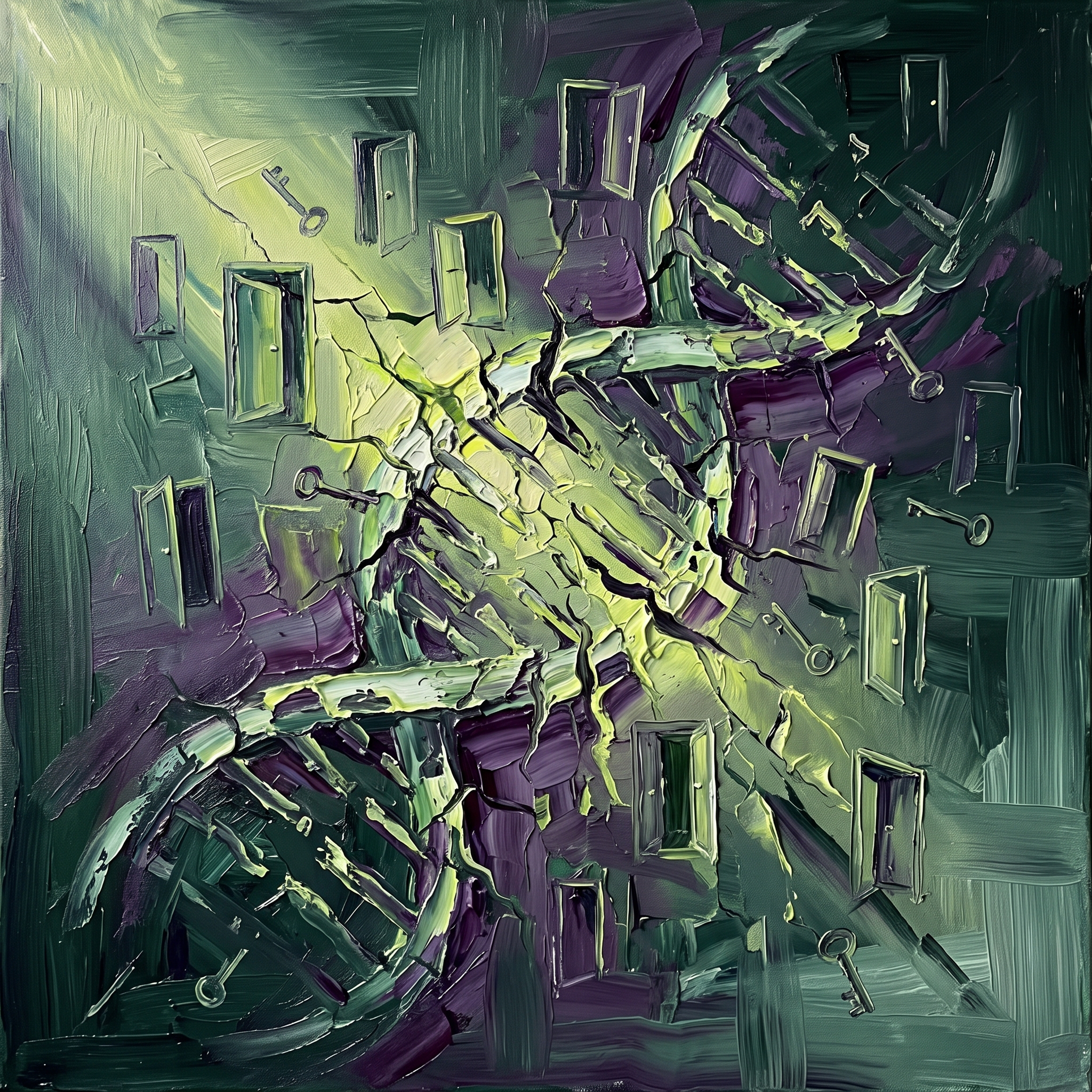
Ki-generated illustration from Sora.
Main moments
Norway invests large amounts in artificial intelligence (AI), but almost exclusively abroad. Via the Oil Fund, we are among the largest owners of Nvidia, Microsoft, Alphabet, Meta and Amazon — the companies that now build and control the AI infrastructure the world will depend on for decades to come.
Nvidia is now worth 2.5 times the combined value of the Oil Fund, and many fear that the circular AI economy, in which capital, hardware and services flow between players, is a bubble. Maybe there will be a value correction coming, but AI is much more important than stock prices. It's an industrial race to control infrastructure for future value creation.
In this industrial AI race, we are so far only a skeptical spectator, and Norwegian companies are postponing the adoption of artificial intelligence on a large scale. Norway has a high investment capacity and relies on data and expertise in key sectors such as energy, process industry, marine and maritime sectors and health and public digitalisation. It should worry us that, in practice, we still contribute more to the growth of other people's AI than our own expertise and infrastructure. It's a paradox, and a regulatory task.
Why can't the private sector pull this off on its own? Because the risk is misdistributed. AI infrastructure requires long-term investments in data, computing, research, security and change expertise — before the impact comes. Most Norwegian companies have too small amounts of data, too weak data teams, too fragmented systems and too little capital to take risks early in the development cycle. The result is that projects stop before they reach scale. This is not an innovation problem, but a structural problem: no single company can bear the cost of national AI capability.
We have seen a model that works: the triangle cooperation in the defense sector, where the state takes risks at an early stage, research develops and tests technology, and industry scales. It has given Norway capacity and expertise that would not otherwise have arisen in the market. AI needs a corresponding structure.
As part of Long-Term Expert Panel on AI We've suggested three steps that solve the problem itself — not just the symptoms:
- Build national AI industry clusters around sectors where Norway already has an advantage: energy, ocean, process industry, health. Secure access to data and computing power according to the Altinn model enables Norwegian operators to build services without being locked into global platforms.
- Attract and develop critical AI competencies. Faster work and study processes, better conditions for key competencies and opportunities for industrial research training give companies access to the roles that determine whether projects scale or stop.
- Establish strong consortia and partnerships, as the financial industry did with BankID and Vipps, or through triangular cooperation between government, research and industry, as we know from the defense sector. In small markets, collaboration is often the only path to competitive scale.
The oil money has given Norway enormous financial strength. The question now is whether we will also use it to build an industrial position in AI, or whether we will settle for being users and investors in someone else's. Future value creation is determined by who builds the infrastructure -- not just who owns the shares.
More from Langsikt

A Norwegian foreign policy for artificial intelligence
Why and how Norway should position itself in a new security policy reality.

Konseptnotat for et norsk KI-sikkerhetsorgan
Hvorfor og hvordan Norge bør etablere et KI-sikkerhetsorgan.

The wave of hacking is coming
Until now, small Norwegian businesses have been protected by the fact that no one bothered to hack them. That is changing with open AI.
Open-source AI makes us more vulnerable
Open-source AI models create as many problems as they solve, and some of them could have catastrophic consequences. The solution is coordinated governance of the pace of AI development.