What if the AI tidal wave arrives?
World-leading economists are warning of an AI revolution and demanding action. Other countries are already well underway with their preparations, but in Norway, very little is happening.

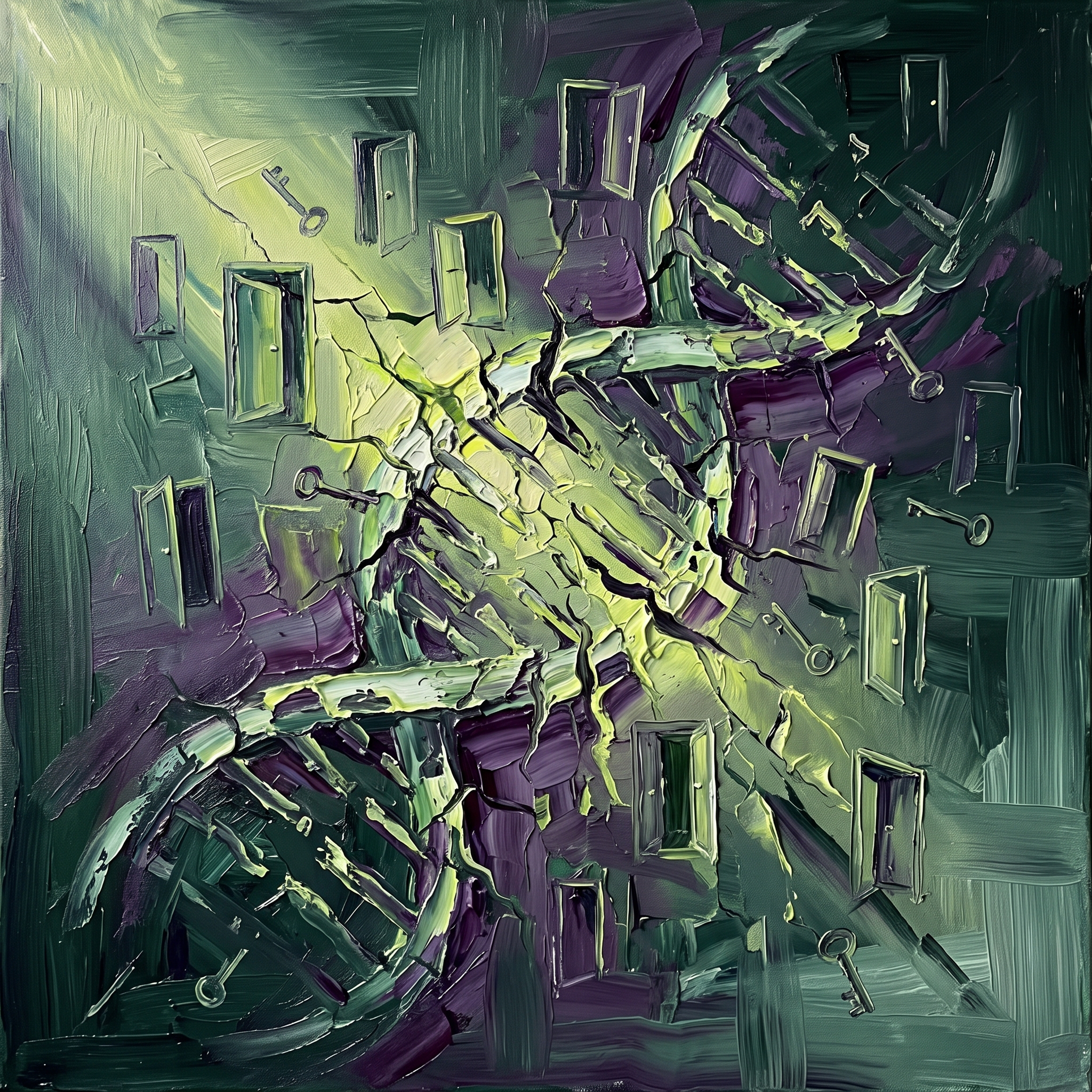
AI-generated illustration from Gemini.
Main moments
"We Must Act Now" is the headline of a new letter signed by over 200 economists and AI researchers, including 16 Nobel laureates.
They argue that AI could become radically more capable over the next decade and that the economic shifts could be greater than those of the Industrial Revolution—but in a much shorter timeframe. The signatories urge policymakers to begin building institutions and economic policies that "steer development in a direction that complements humans and benefits society."
Terje Erikstad recently outlined some of the potential economic consequences, based on an analysis from the international think tank for central banks, the BIS (DN, July 4). The outcomes range from a collapse in demand due to unemployment and lost wages to six percent annual growth. The report also touches on an even more extreme scenario: an outright growth explosion as a result of AI improving itself.
The money also seems to believe that something big is on the horizon. This year alone, Microsoft, Alphabet, Amazon, and Meta are spending around 7 trillion kroneron AI infrastructure. That is a fourfold increase in three years. Sums of this magnitude can only be justified if investors believe AI has historically significant potential.
Both world-leading experts and investors have been wrong before. They could be wrong this time, too. But is it wise to gamble on that?
Some countries are taking transformative AI seriously, such as the UK. For many years, they have been developing scenario analyser for AI that also includes more drastic outcomes. The British have also built institutions. A technical AI institute advises the government on what lies on the horizon, and before the summer, they established a state-run AI Economics Institute, led by Nobel laureate Simon Johnson.
The contrast with Norway is stark. While we do have a handful of researchers whodiscuss the topic in the public sphere, it is quite quiet from the political environment and the authorities.
The government has recently established AI Norway under the Norwegian Digitalisation Agency, which is intended to promote the use of AI in Norwegian businesses. That is all well and good, but the mandate gives little reason to expect exhaustive work on societal consequences and policy.
Not so much as a public commission report (NOU) has been commissioned regarding the consequences of AI for the Norwegian economy. The Tax Commission's mandate and subsequent report do not even mention artificial intelligence, as pointed out by Fabian Nøst Harang and Andreas Ravndal Kostøl (DN June 30).
Tomorrow's economy will be populated by countless digital agents. They will likely be owned and shaped by a handful of non-European companies. They are already smart enough to solve unsolved math problems on the first try. And currently, their processing power is being directed toward creating even better versions of themselves.
There seems to be near cross-party consensus that this development will not have any significant impact on the Norwegian model in the coming decades. Or at least, that there is little point in thinking out loud about it.
This is unfortunate, because Norway needs its own analyses and policies in this field. The Norwegian economy is in an unusual position, partly because the state is a massive capital owner – including of AI companies. This naturally implies that we will lose big if it is a bubble. One would therefore think that this ensures we win big if AI lives up to expectations.
But there is no guarantee of that. As American investor Carson Block has pointed out, it could be that the stock market collapses if AI takes over enough jobs, since the unemployed will have to sell their shares to generate income.
Let us hope we are not facing a tidal wave while we sit on the shoreline counting grains of sand. If I were in the government offices, however, the economists would be called home from their beach vacations quite soon.
More from Langsikt

A Norwegian foreign policy for artificial intelligence
Why and how Norway should position itself in a new security policy reality.

Konseptnotat for et norsk KI-sikkerhetsorgan
Hvorfor og hvordan Norge bør etablere et KI-sikkerhetsorgan.

The wave of hacking is coming
Until now, small Norwegian businesses have been protected by the fact that no one bothered to hack them. That is changing with open AI.
Open-source AI makes us more vulnerable
Open-source AI models create as many problems as they solve, and some of them could have catastrophic consequences. The solution is coordinated governance of the pace of AI development.