A golden year for AI
2026 will be a golden moment for artificial intelligence. We should enjoy it while it lasts.

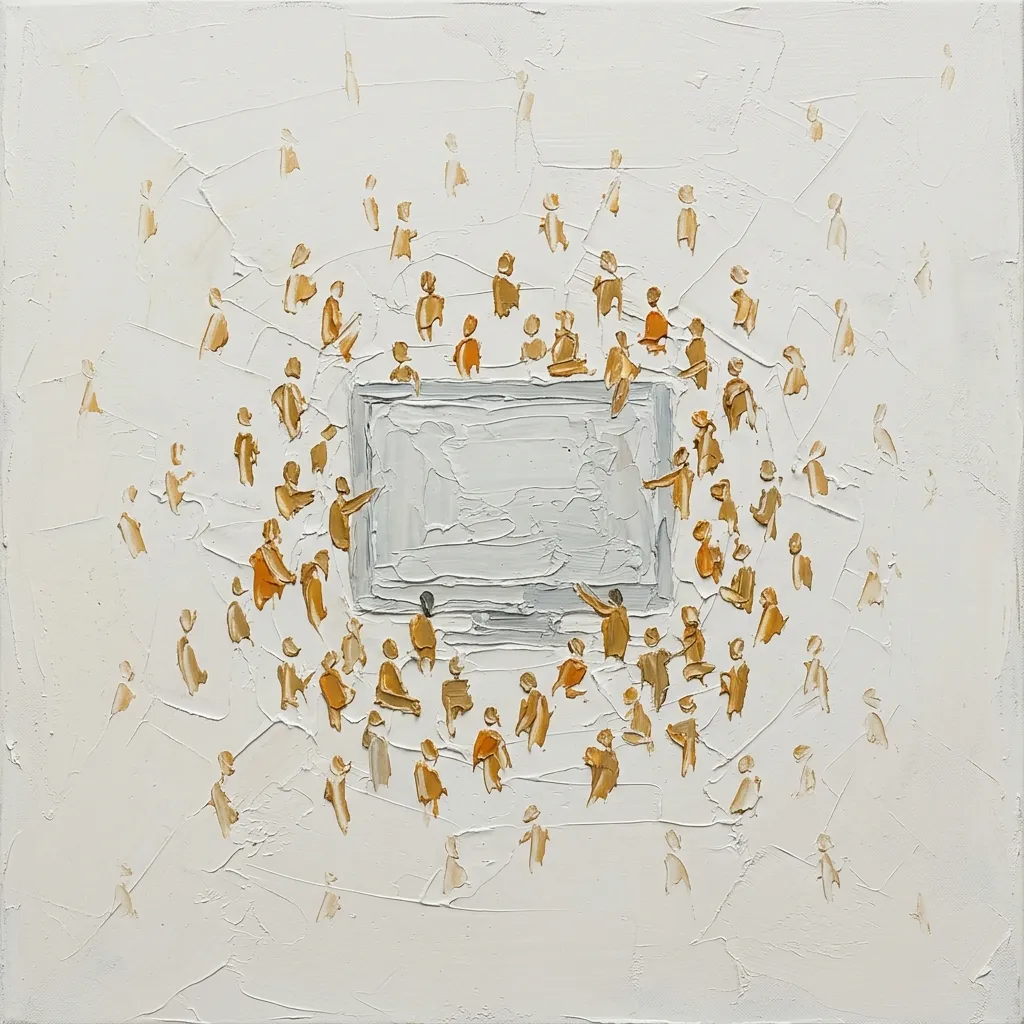
Ki-generated illustration from Sora.
Main moments
We are facing troubled times, especially related to the development of KICs and concentration of power. Still, I think 2026 is going to be a fantastic KI year for the little man.
I am talking, of course, about the rapid improvement of chatbots, such as ChatGPT, Claude and Gemini! Norwegian KI experts often refer to chatbots as a sideshow. The truth is that the technology behind the chatbots is developed by the best KI environments on the planet and is the leading KI technology.
These models can be accessed by anyone for less than it costs to subscribe to Dagsavisen. A kid in a small town in Norway has almost the same access to the powerful AI technology as the developers in Silicon Valley.
If you've read a lot of KI criticism this Christmas, you might want to ask what use a hallucinating chatbot that can neither think nor understand, but only spews out statistically based predictions, will have. The question was uninformed in 2023. In 2026, it's misinformation. It is more precise to call the leading models the super-librarians of the internet. And the opportunities they provide are innumerable.
They empower you in the face of bureaucracy. The chatbots can go through all the documents in a case in a foreign language and write a letter that promotes your interests better than you can hope to get by yourself.
They empower you in the face of argumentative bullies. In a minute, noisy and complicated claims about the state of affairs can be fact-checked and explained at a level that even a ten-year-old will understand. And in ten minutes, the chatbots can give you a thorough and clear knowledge summary of the research front in any field.
They make you more creative and a better consumer. If you are renovating the apartment, the model provides floor plans, illustrations and a detailed overview to the workers, and a critical assessment of whether the offer you have received is reasonable.
The models make technological illiterates competent. Chatbots are not just the key to the internet. There also the key to understanding all other technologies. If your old mother has problems with the router or phone, they can take a picture of the technical dupe and get a simple explanation of how it works.
The technology is also more universally designed than anything well-meaning bureaucrats could hope to create. If you don't like to write, you can talk to them. If you can't read, you can make the model read it for you. If you don't know the language, the model can translate.
Of course, there are also some challenges. There is a danger of letting the models think for themselves. But the language models also stimulate learning. When good answers are readily available, there are no limits to what questions one can dare to ask oneself. This is how chatbots breed curiosity.
It is also easier for most of us to investigate a phenomenon in the form of a conversation. That the interlocutor is a machine frees the main barrier to learning something new; that we do not dare to ask questions for fear of being stupid.
The reason 2026 will be a particularly happy moment in KI development is a combination of the structure of the market, the financing model and the maturity of the technology.
The fierce competition among KI companies drives prices down, increases the quality and speed of improvements.
The financing model is user payment and investors' future hopes. Where social media has been corrupted by companies having a vested interest in satisfying advertisers before users, it still pays for the companies to create services people benefit from.
That the technology is still immature is another stroke of luck. Although the models have become extremely capable librarians, they have not become independent yet. You can't ask them to go through your private finances, cancel all unnecessary subscriptions, and negotiate cheaper alternatives. They can help you, but you be the project manager and perform many of the steps yourself.
The lack of autonomy is annoying, but it also protects your job and strengthens your position of power as a worker. Right now, almost anyone can do their job better with the support of a language model. But it's hard for the boss to replace you with a chatbot. However, this can change quickly. The companies are working hard to make the models as self-reliant as they are school-smart.
The more autonomous the models become and the more they can learn as they exercise their tasks, the easier it is for a few people to get a fleet of AI systems to do jobs that today require humans. Then there is a danger that KI will weaken the workers, as I and Ola Pedersen describe in a new Long-Term Note.
In the years to come, KI will put our society to the test in ways that are hard to imagine. We may be facing enormous concentration of power and autonomous KI systems that are difficult, if not impossible, to control.
This year, I think we can breathe with our stomachs. To the extent that you lose your job, it will be because your coworkers become so productive that they can also perform your job at the same time as they currently perform their own.
The biggest KI threat facing the ordinary citizen is thus their passive attitude towards new technologies. Mange's only encounter with KI will be in the form of bad free versions of KI and bad KI summaries on the websites they frequent and algorithm-driven social media.
At the same time, the neighbor will have its capacities expanded to a few hundred times a month. This is the food difference most of us will notice in the year we enter.
Which booth would you like to be placed in? Happy new KI year!
More from Langsikt
Confused about the AI threat?
Recent events have made AI risk a topic of public debate in Norway. Some researchers issue strong warnings, others claim they see doomsday on the horizon, while others dismiss the whole thing as marketing campaigns. This document summarizes what we know, what is disputed, and what the implications of this uncertainty are. The document can also be downloaded as a PDF.

A Norwegian foreign policy for artificial intelligence
Why and how Norway should position itself in a new security policy reality.

Konseptnotat for et norsk KI-sikkerhetsorgan
Hvorfor og hvordan Norge bør etablere et KI-sikkerhetsorgan.

The wave of hacking is coming
Until now, small Norwegian businesses have been protected by the fact that no one bothered to hack them. That is changing with open AI.