Better assistance
If the government wants to fight poverty, why not give the money directly to the poor?
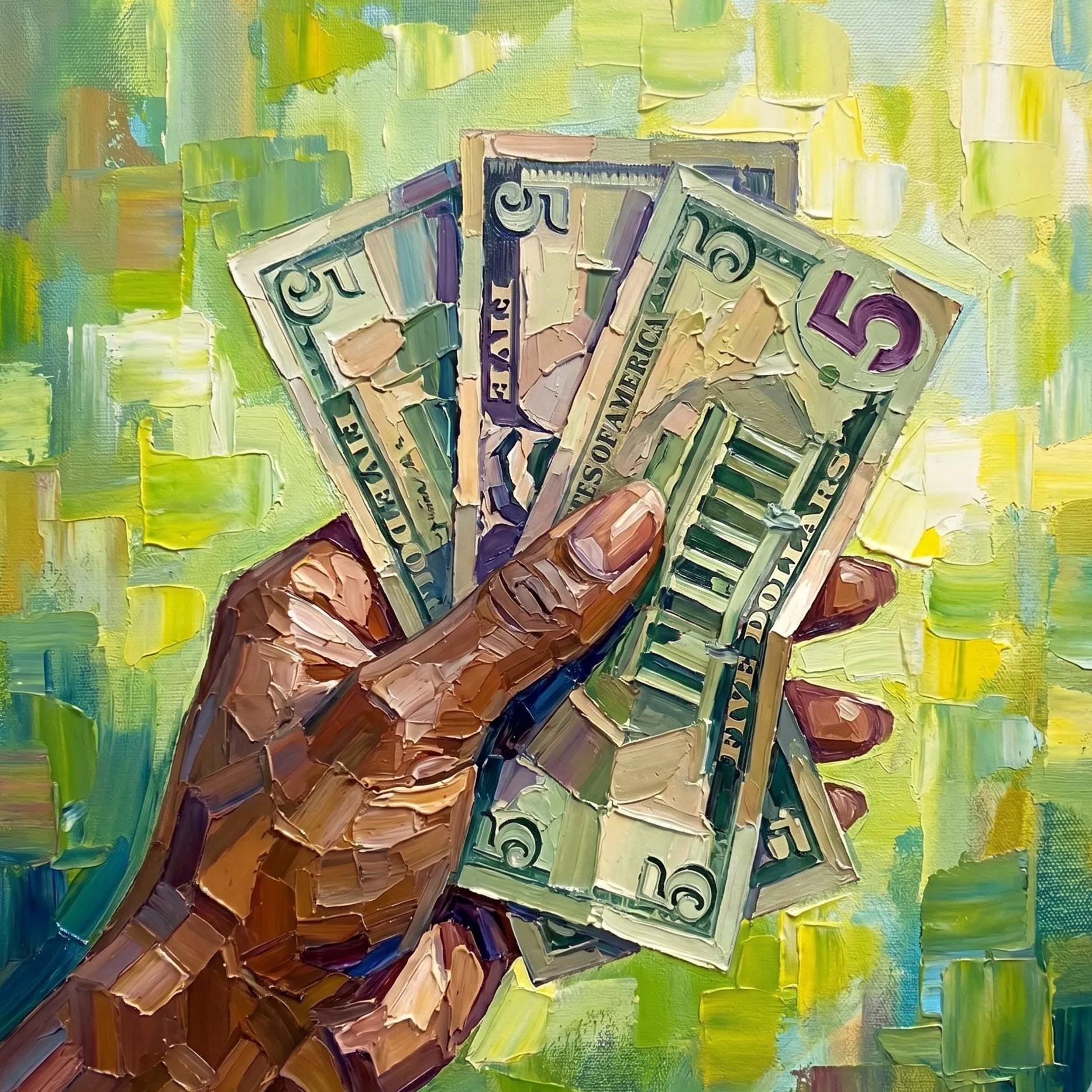
Ki-generated illustration from Gemini.
Main moments
Norway will provide NOK 56 billion in aid this year. Yet we spend astonishingly little on some of the things that have the best documented effect: Giving money only to the very poorest.
The Epstein revelations about Terje Rød-Larsen, Mona Juul, the International Peace Institute (IPI) and the Ministry of Foreign Affairs have contributed to weaken confidence for Norwegian aid.
If confidence is to be restored, something drastic will have to change. A good start is to do more of what works.
Today is Norwegian aid dispersed of 851 partners and 1546 projects — an extreme fragmentation. This is not only because Norwegian aid has extremely many objectives — the whole 116 different goal formulations -- but also a basic assumption in the system: that poor people cannot be trusted with money.
The research is clear. Extensive research reviews from, among others Overseas Development Institute and National Bureau of Economic Research points to the same thing: when extremely poor people get more money, their children go to school more, their health improves and they invest in their own businesses.
The myth that money is wasted on alcohol and tobacco is wrong.
Giving poor direct remittances is not a new idea. In 2024, the World Food Programme (WFP) distributed over 23 billion in cash in more than 60 countries, to over 50 million people.
Compared with other types of aid, cash is cheaper to administer, strengthens local markets and gives recipients the freedom to prioritize themselves.
Research also shows that it has lasting effects. For example, it is shown that the recipients get increased income even ten years after a one-time transfer has occurred.
The way we fight poverty in Norway is primarily by giving people free welfare services and money. Why not do the same in poor countries?
Money doesn't solve everything. It does not build institutions and does not educate teachers -- at least not directly.
But if the goal is to reduce poverty -- the very core of aid -- cash transfers are the best documented remedy we have.
Nevertheless, its use of cash transfers still an exception in Norwegian aid. At a minimum, cash should become a benchmark we consider all other aid programs up against.
“Cash is cheaper to manage, strengthens local markets and gives recipients the freedom to prioritise themselves.”
Whether it's a think tank in the United States or a Norwegian NGO: If a measure is not expected to yield better results than money in the hands of the extremely poor, why pay for it?
If the government is to succeed with its planned aid reform, “Project Turning Point,” the debate must also be about whether we dare to trust those we want to help. To Development Minister Åsmund Aukrust: Do you trust that poor people themselves can make good choices?
Sometimes the most radical reform is also the simplest.
Just give them the money.
More from Langsikt

[Opptak] Forbi overskriftene – hva vil vi faktisk gjøre med norsk bistand?
Se opptak av frokostarrangement i samarbeid med Civita og Agenda, med politikerdebatt mellom utviklingsminister Åsmund Aukrust, Erna Solberg (H), Himanshu Gulati (FrP) og Kirsti Bergstø (SV).
Langsikt's alternative aid budget
How the Norwegian aid budget should look.
The second problem with aid
Much of the pressure on foreign aid comes from the outside. But we must take some of the blame ourselves.
Submission to Project Turning Point (Prosjekt Vendepunkt)
Six proposals for Project Turning Point.