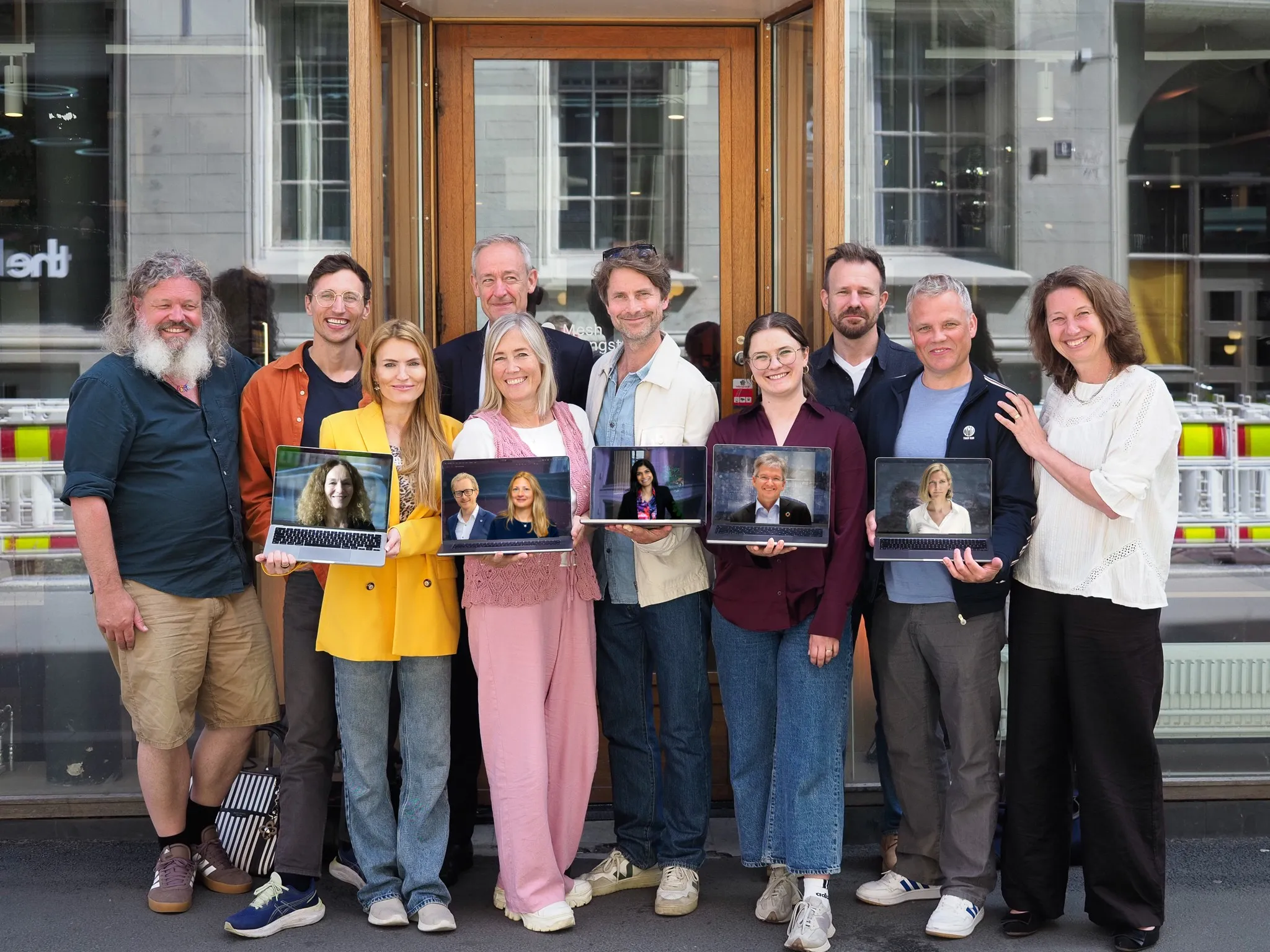
Long term expert committee at KI.
Main moments
Summary
"The Ten Oil Commandments" from 1971 became the guiding principles for how Norway should govern important natural resources so that they benefit the entire society. In this way, Norway managed to not only build an industry, but to increase prosperity for an entire nation. Norway's Government Pension Fund Global (GPFG), also known as the Oil Fund, is the world's largest sovereign wealth fund. Today, Norway is faced with a new resource and a new force of change: data and artificial intelligence (AI).
AI has enormous potential to increase human welfare, but also entails unprecedented dangers. Therefore, Norwegian politicians need principles – or commandments – that provide direction when technology develops faster than legislation, institutions, and political processes.
Langsikt’s expert committee on AI has therefore developed ten commandments followed by a total of 45 policy proposals in ten separate chapters. This report was originally published in Norwegian, targeting Norwegian policymakers, but has been translated to English as it is relevant for and could be of inspiration to other countries as well.
1. VALUES: AI and data shall strengthen the Norwegian social model. Norway must adapt welfare systems, taxes, and ownership structures so that the benefits from transformative AI are shared broadly.
2. FOREIGN POLICY: Norway shall have a proactive foreign policy on AI. We must cooperate more closely with neighboring countries, the EU, international organizations, and global alliances to ensure that Norwegian interests, values, and obligations are taken into account.
3. PUBLIC MANAGEMENT: An effective public administration shall foster security and trust in AI. The state must move from being merely a regulator to actively helping citizens and businesses use AI within safe frameworks.
4. PHYSICAL INFRASTRUCTURE: The state shall ensure a safe, effective, and sustainable physical foundation for AI and data. The state must prioritize development of AI infrastructure and ensure that the entire value chain from electricity production to end users is protected in line with its importance for society and national security. Climate and environmental considerations must be taken into account.
5. DATA: Data shall be used for knowledge development and value creation. The government must invest more in collecting, managing, and sharing prioritized datasets from both public and private enterprises. We must develop an economic model for data that provides value to Norwegian society.
6. DIGITAL INFRASTRUCTURE: Public agencies shall ensure access to secure and reliable AI models. The state must ensure that models trained on Norwegian data are available to all Norwegians. The models must be protected according to how important they are to society and national security.
7. RESEARCH: Norway shall have leading international AI research communities. Norway must build AI expertise and attract talent. This requires increased investments in research and higher education.
8. INDUSTRY: The government shall facilitate a competitive AI-driven private sector. The private sector needs a constructive regulatory framework and access to capital. Foreign investments should contribute to the transfer of expertise, local value, and job creation.
9. PUBLIC SECTOR: AI shall make public services better and more efficient. Innovative and responsible use of AI and data is necessary to ensure the welfare state's ability to continue to deliver good services in the future.
10. CITIZENS: AI must give citizens a sense of purpose at work and in their free time. AI literacy must be developed from early education and throughout working life, ensuring that everyone can benefit from the technology. AI should support – not replace – human judgement, autonomy, and wellbeing.
Members of the Expert Committee
- Silvija Seres - Chair of the committee. Technology investor, mathematician and board member with a background from Oxford and Microsoft. She has a part-time position as Special advisor at Langsikt.
- Laxmi Akkaraju - Senior Vice President of Global Services & Solutions at Cognite.
- Heather Broomfield - Senior advisor of the Norwegian Digitalisation Agency.
- Paul Chaffey - Special advisor at Halogen and former State Secretary at the Ministry of Local Government and Modernisation for the Conservative Party.
- Morten Goodwin - Professor of artificial intelligence at the University of Agder, co-founder and lead researcher at AI Experts and deputy director at the Center for Artificial Intelligence Research (CAIR).
- Marianne Marthinsen - Former member of parliament for the Labour Party and director of strategy, insight and analysis at Finance Norway.
- Klas Pettersen - Director of SimulaMet and former CEO of NORA (The Norwegian Artificial Intelligence Research Consortium).
- Isabelle Ringnes - Entrepreneur and speaker in the field of technology and gender equality.
- Niels Nagelhus Schia - Research professor at NUPI (Norwegian Institute of International Affairs) and head of their Research Group for Security and Defense.
- Eskil Grendahl Sivertsen - Special advisor at FFI (Norwegian Defence Research Establishment).
- Aksel Braanen Sterri - Research director at Langsikt and a researcher in political philosophy.
- Camilla Stoltenberg - CEO of NORCE and former director of the Norwegian Institute of Public Health.
- Ellen Stralberg - Senior project manager at the Norwegian Board of Technology and former Senior advisor of the Norwegian Digitalisation Agency.
- Christer Tryggestad - Senior Partner Emeritus at McKinsey and member of Langsikt’s advisory board.
- Torgeir Waterhouse - Partner at Otte and former director of Internet & New Media at TEK Norway.
You can read more about the background of the selection by here.
More from Langsikt

Confused about the AI threat?
Recent events have made AI risk a topic of public debate in Norway. Some researchers issue strong warnings, others claim they see doomsday on the horizon, while others dismiss the whole thing as marketing campaigns. This document summarizes what we know, what is disputed, and what the implications of this uncertainty are. The document can also be downloaded as a PDF.

A Norwegian foreign policy for artificial intelligence
Why and how Norway should position itself in a new security policy reality.

Konseptnotat for et norsk KI-sikkerhetsorgan
Hvorfor og hvordan Norge bør etablere et KI-sikkerhetsorgan.

The wave of hacking is coming
Until now, small Norwegian businesses have been protected by the fact that no one bothered to hack them. That is changing with open AI.